

Setting up SSO configuration
Step 1: Create a SAML application on your IdP platform
Begin this process by setting up a SAML application on your IdP platform, such as Okta. During the setup, provide placeholder values for the following fields:- SP Entity ID or Issuer or Audience URI
- Assertion Consumer Service (ACS) URL
Step 2: Configure SSO on RisingWave Cloud
- Go to Organization and select the SSO tab.
- Click Create SSO configuration.
- Create a descriptive name for your SSO configuration. Enter the SSO URL, select the protocol and signature algorithm you used on your IdP platform, and upload the IdP certificate.
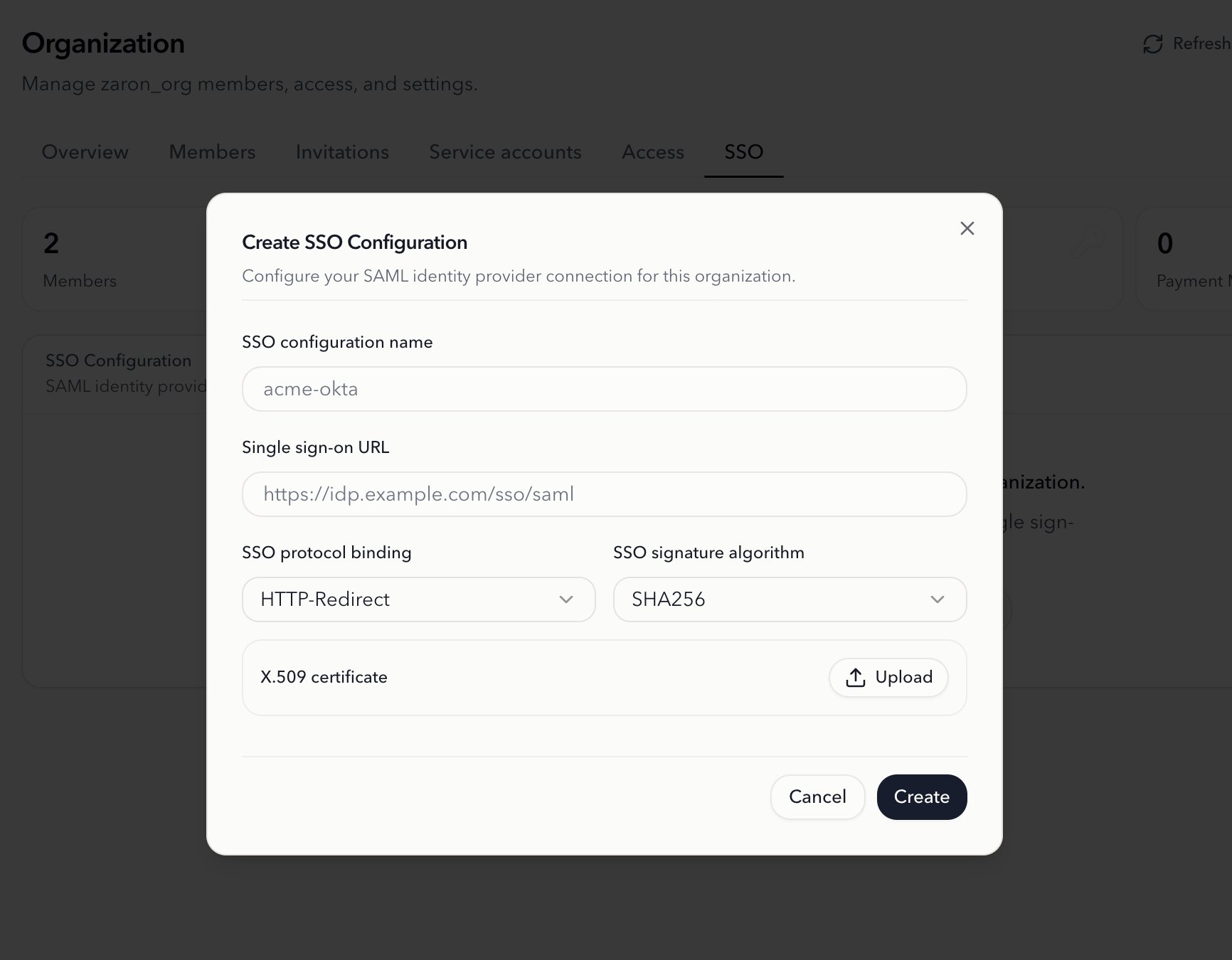
If you're using Okta, you can find the values here
If you're using Okta, you can find the values here
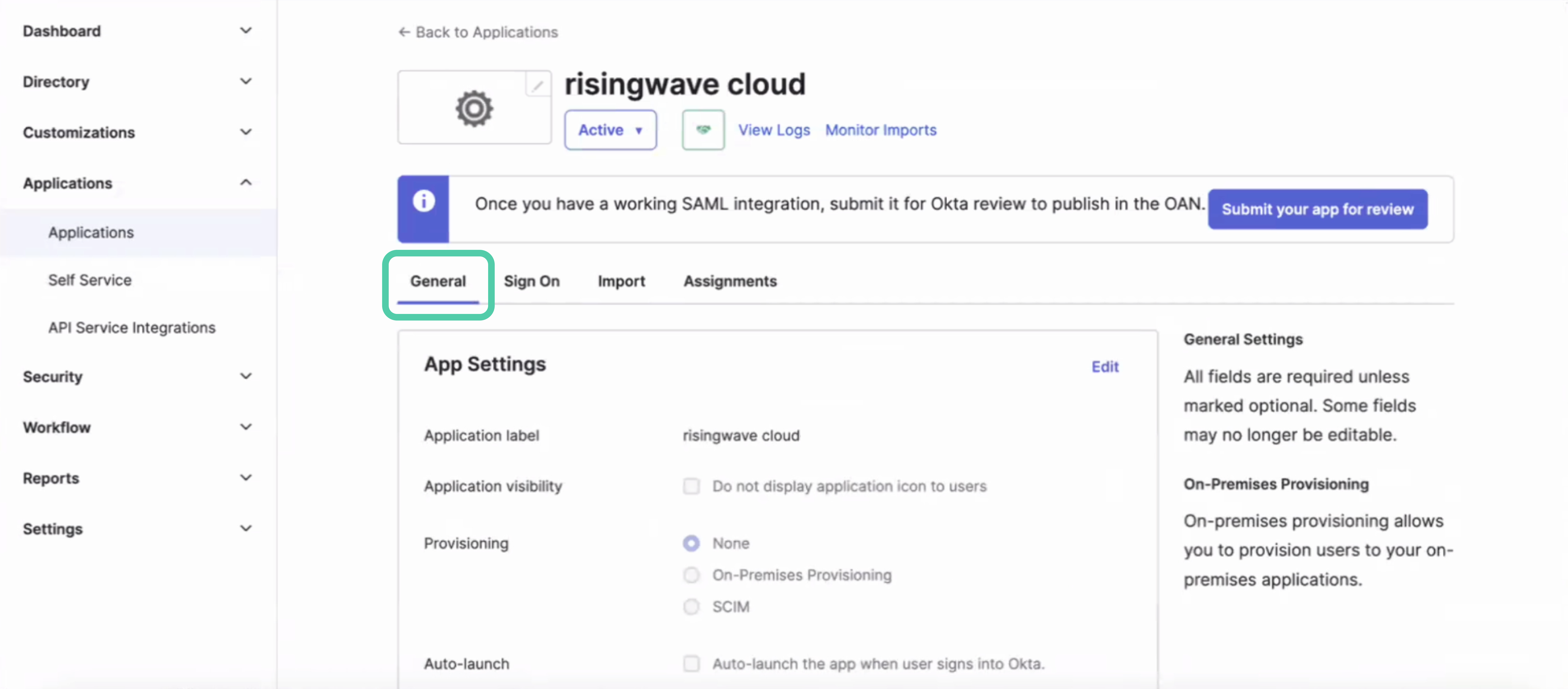
- Log in to your Okta account and navigate to the Applications section.
- Select the SAML application you created for RisingWave Cloud.
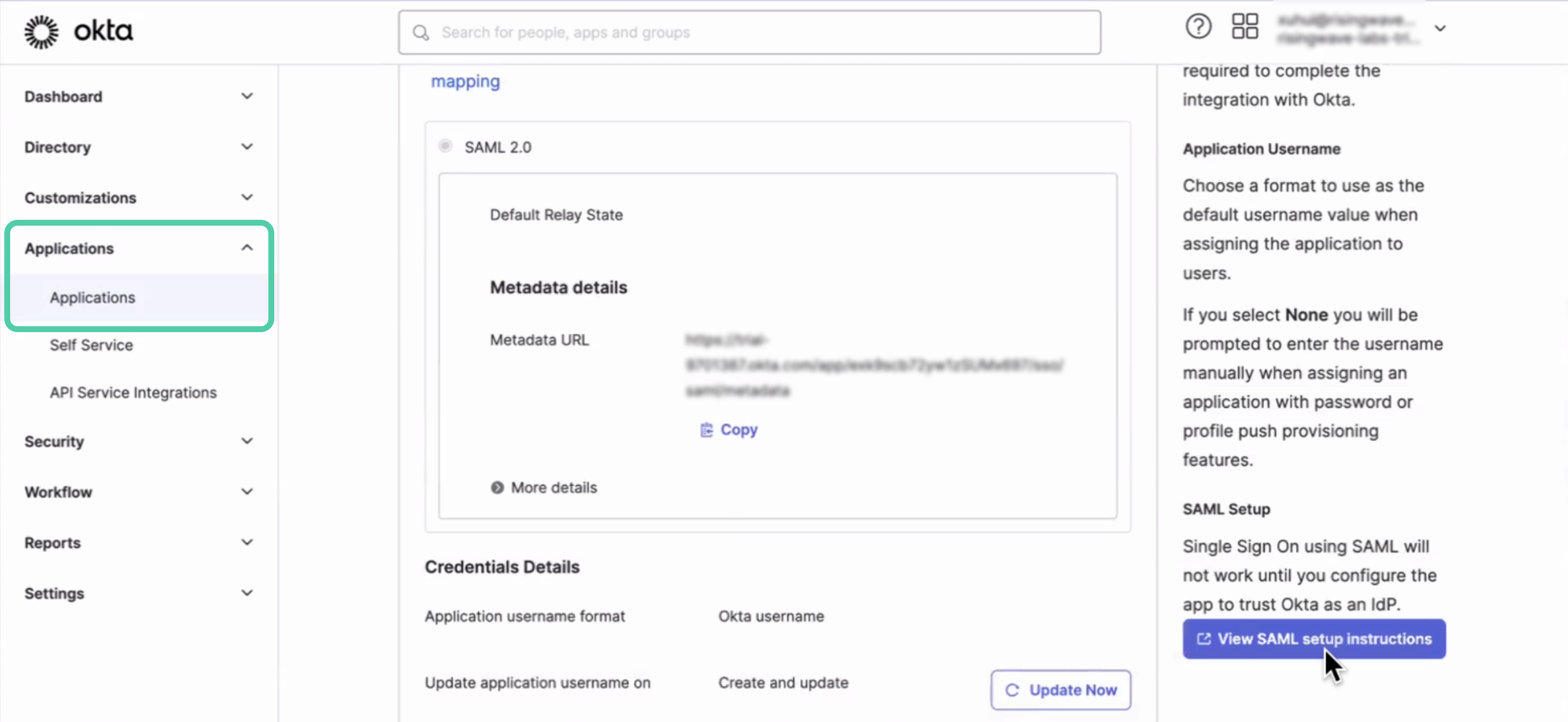
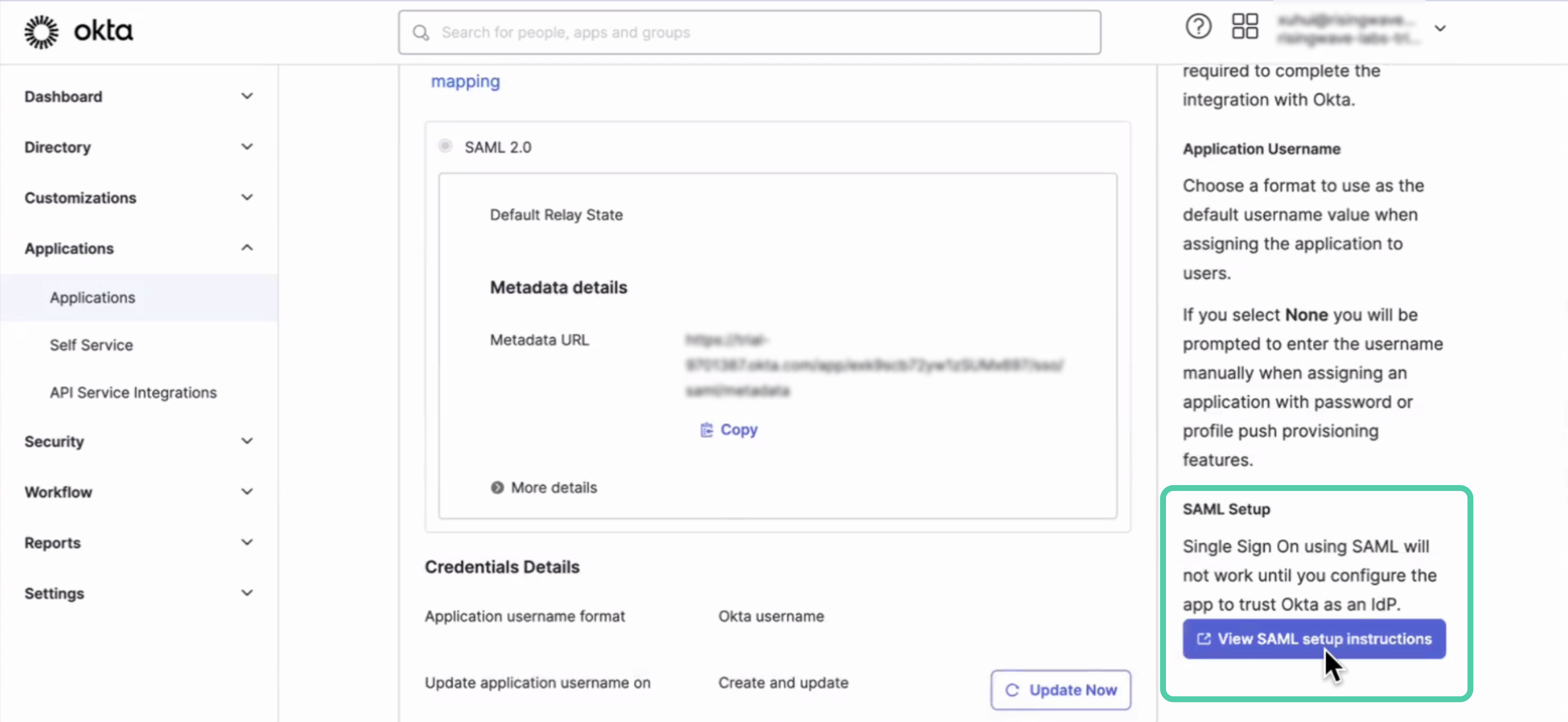
- Click View SAML setup instructions.
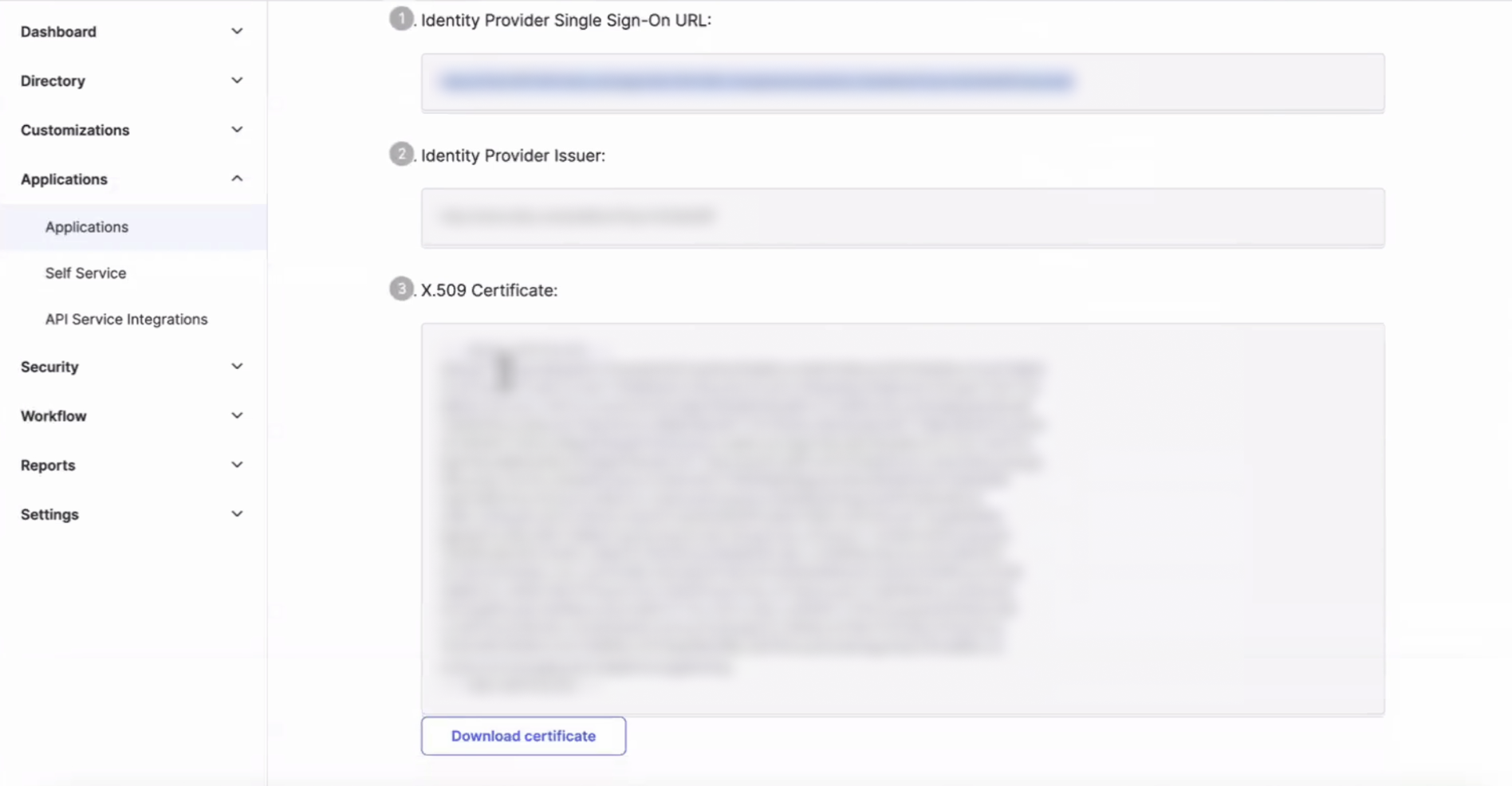
- Click Confirm to save the configuration.
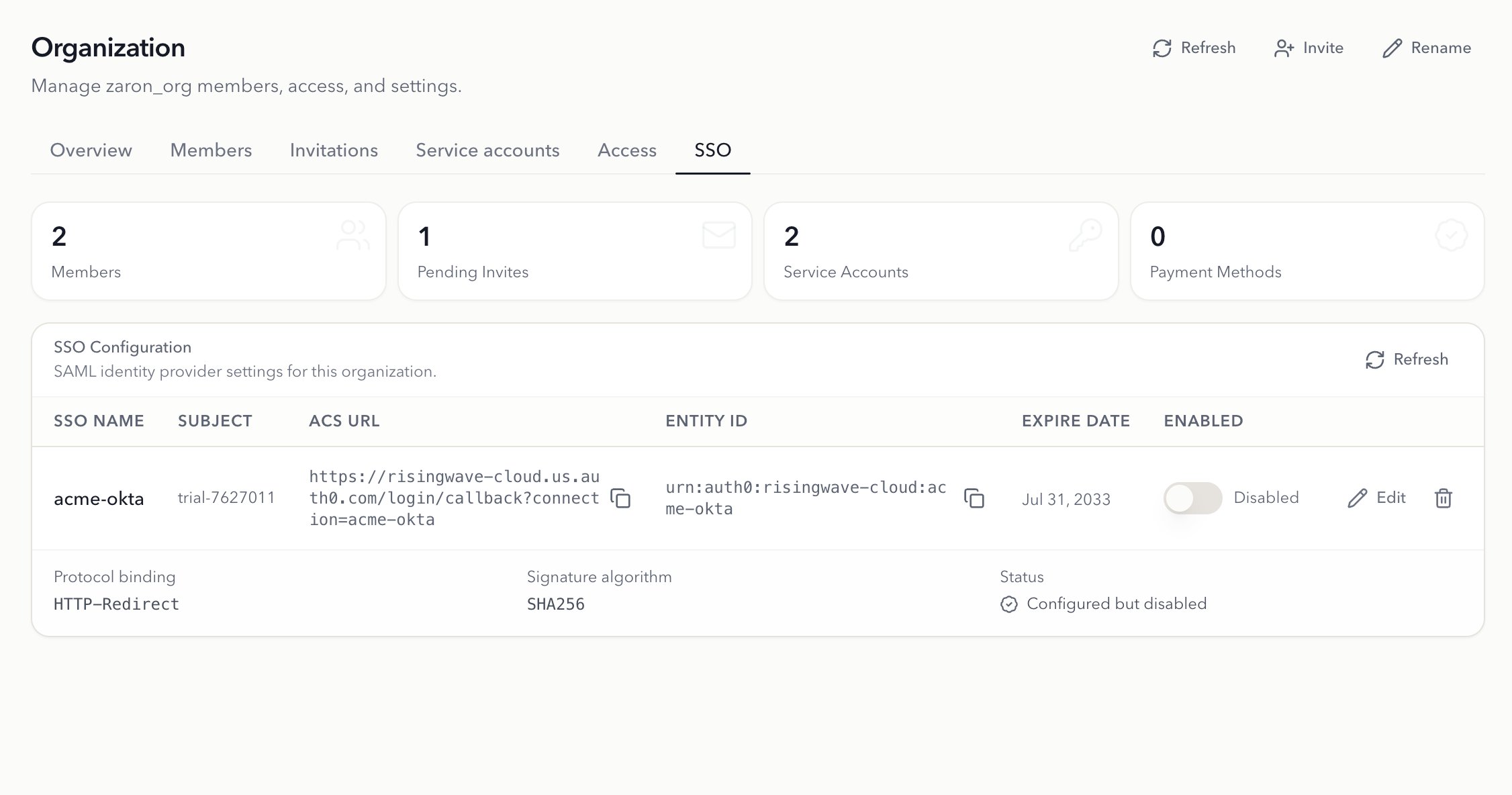
- After creation, a card with the SSO details will be added to the SSO configuration page. Use the
AscUrlandEntity IDvalues from this card to fill theIdP Single Sign-On URLandSP Entity ID / Issuer / Audience URIfields on your IdP platform.
If you're using Okta, you can find the settings here
If you're using Okta, you can find the settings here
- In the SAML application for RisingWave Cloud, select the General tab.
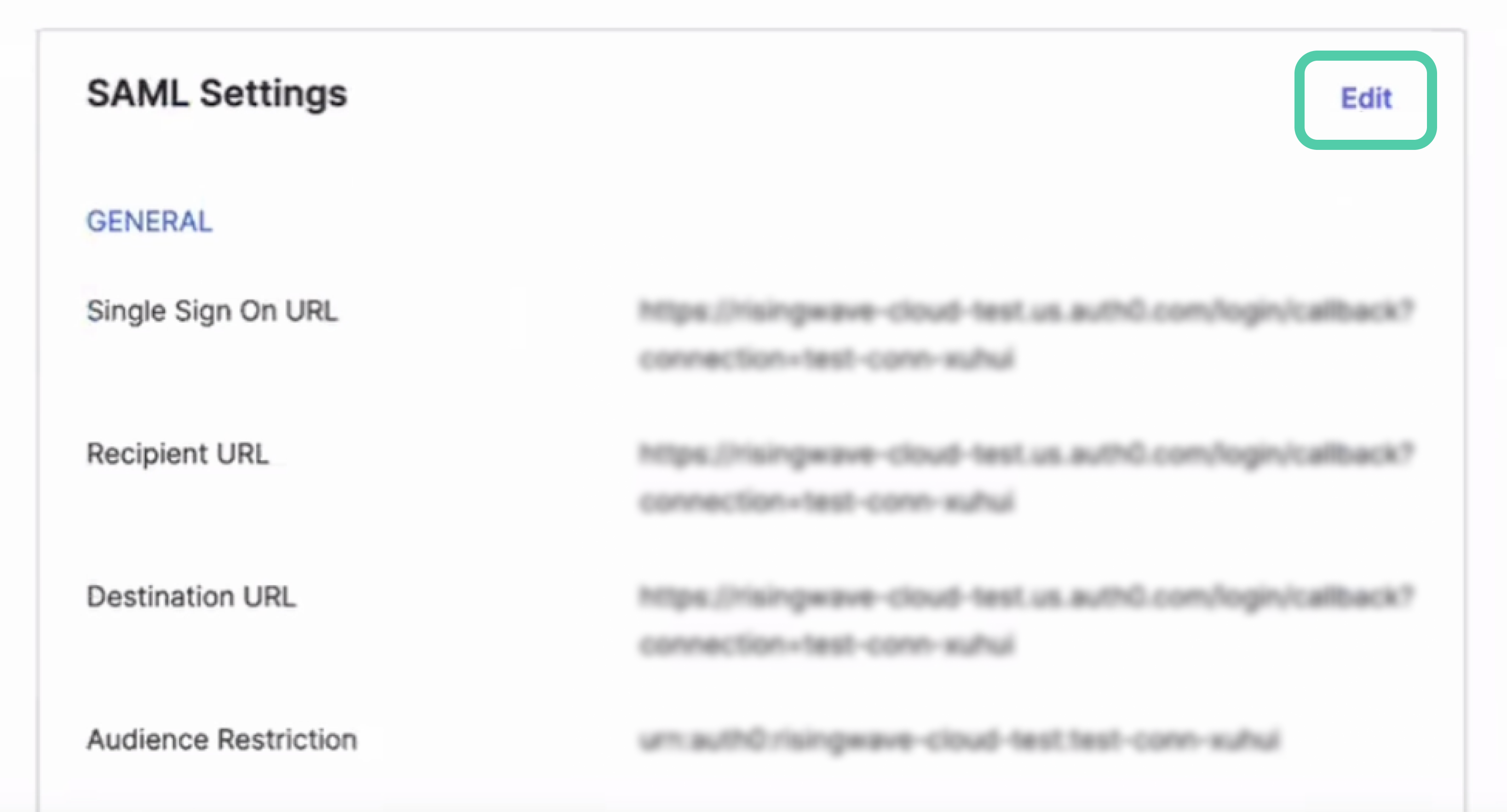
- Scroll down to the SAML Settings section and click Edit.

- Select the Configure SAML tab. Enter the
Single sign-on URLandAudience URI (SP Entity ID)values withAscUrlandEntity IDon the SSO configuration card on RisingWave Cloud.
- Scroll down and click Next. Then, Finish.
- Switch the toggle on the card to enable the SSO configuration for your organization.
Logging in with SSO
Once SSO is configured for your organization, all users can log in to RisingWave Cloud using their work email addresses and SSO credentials. Steps:- On the login page, click Enterprise single sign-on.
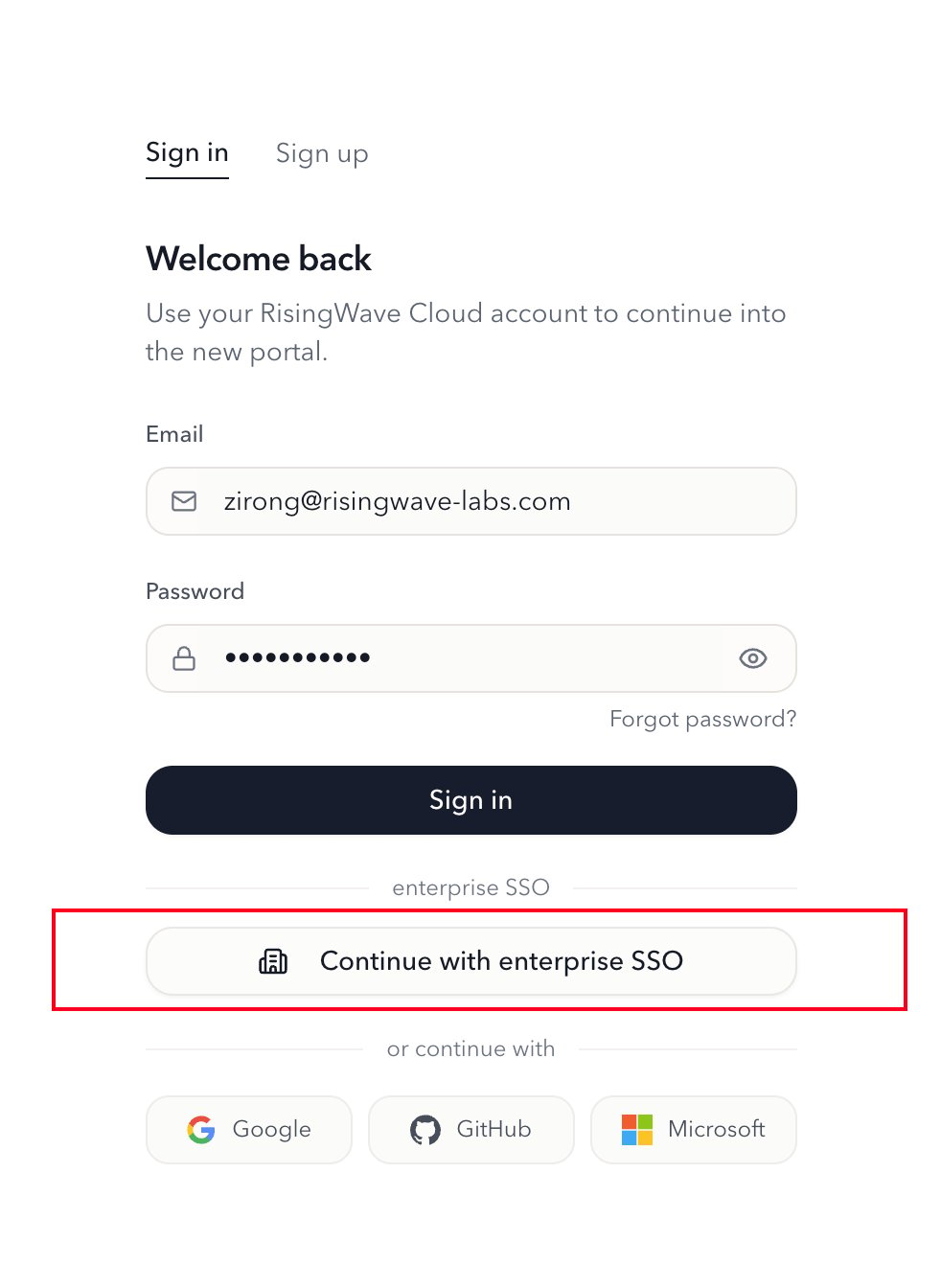
- Enter your work email and click Log in.
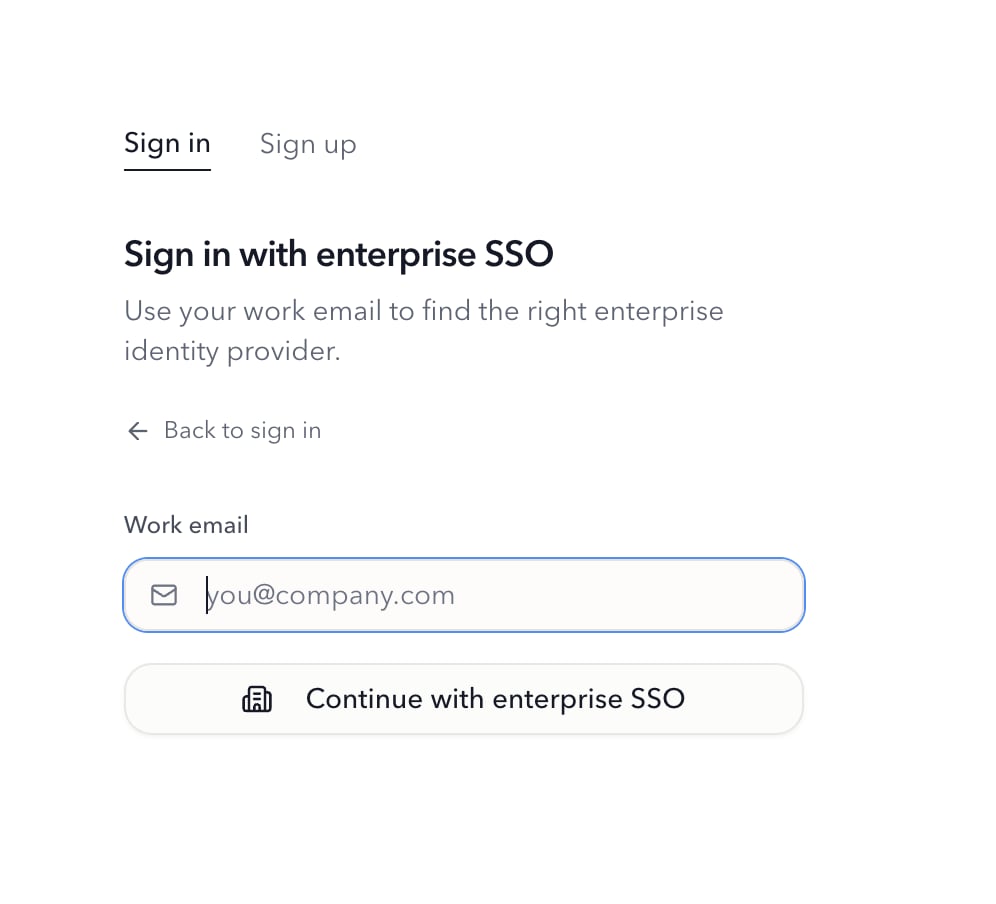
- You’ll be redirected to your IdP platform to complete the authentication process.