

Notification list
In RisingWave Cloud, click Messages in the main navigation, then select the Inbox tab. It lists notifications across your organization.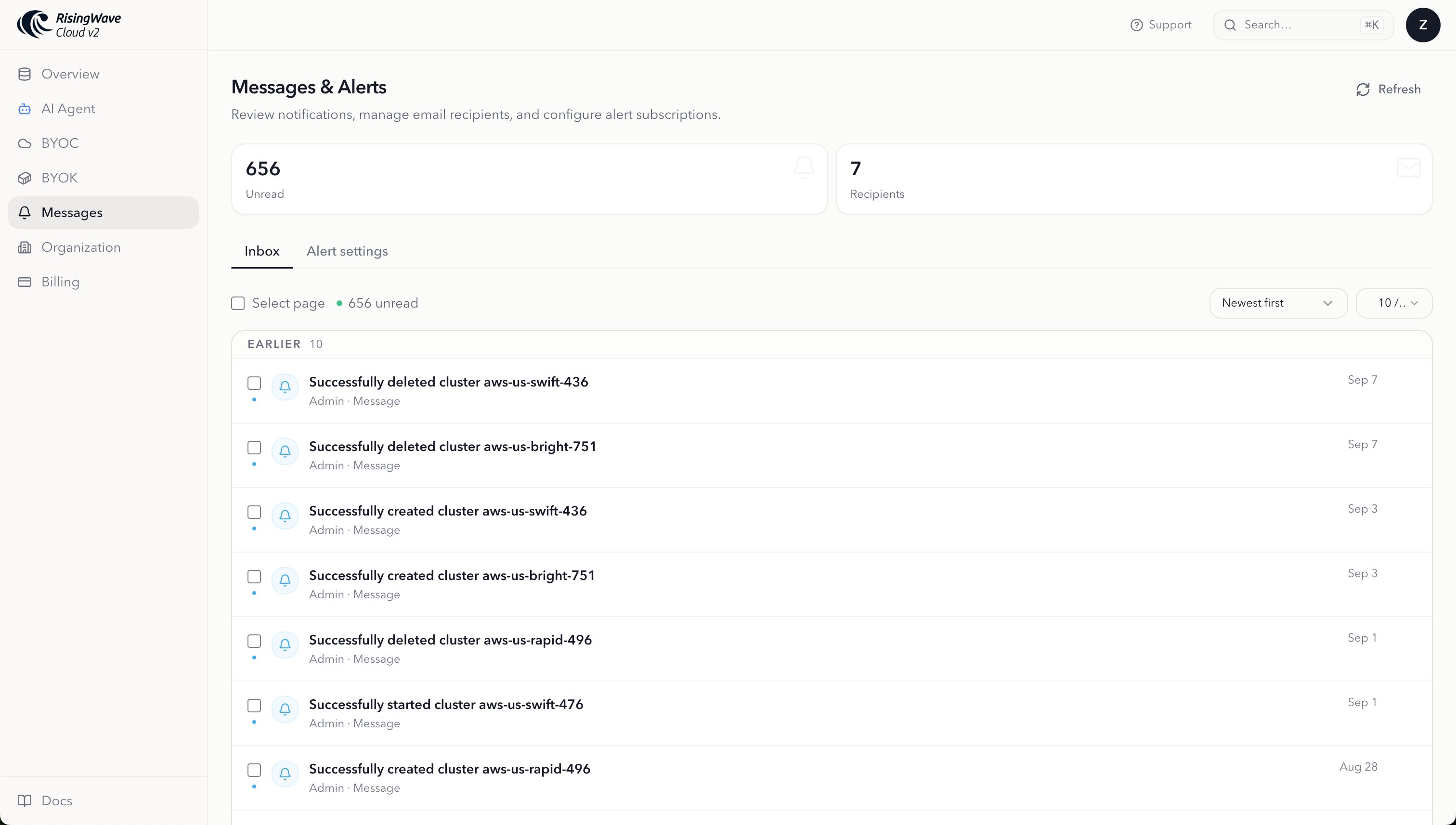
-
Severity levels: Alerts are classified by severity to help prioritize your response.
-
Function categories: Alerts are classified by the relevant system component or function.
Alert settings
To configure who receives alerts, click Messages in the main navigation, then select the Alert settings tab.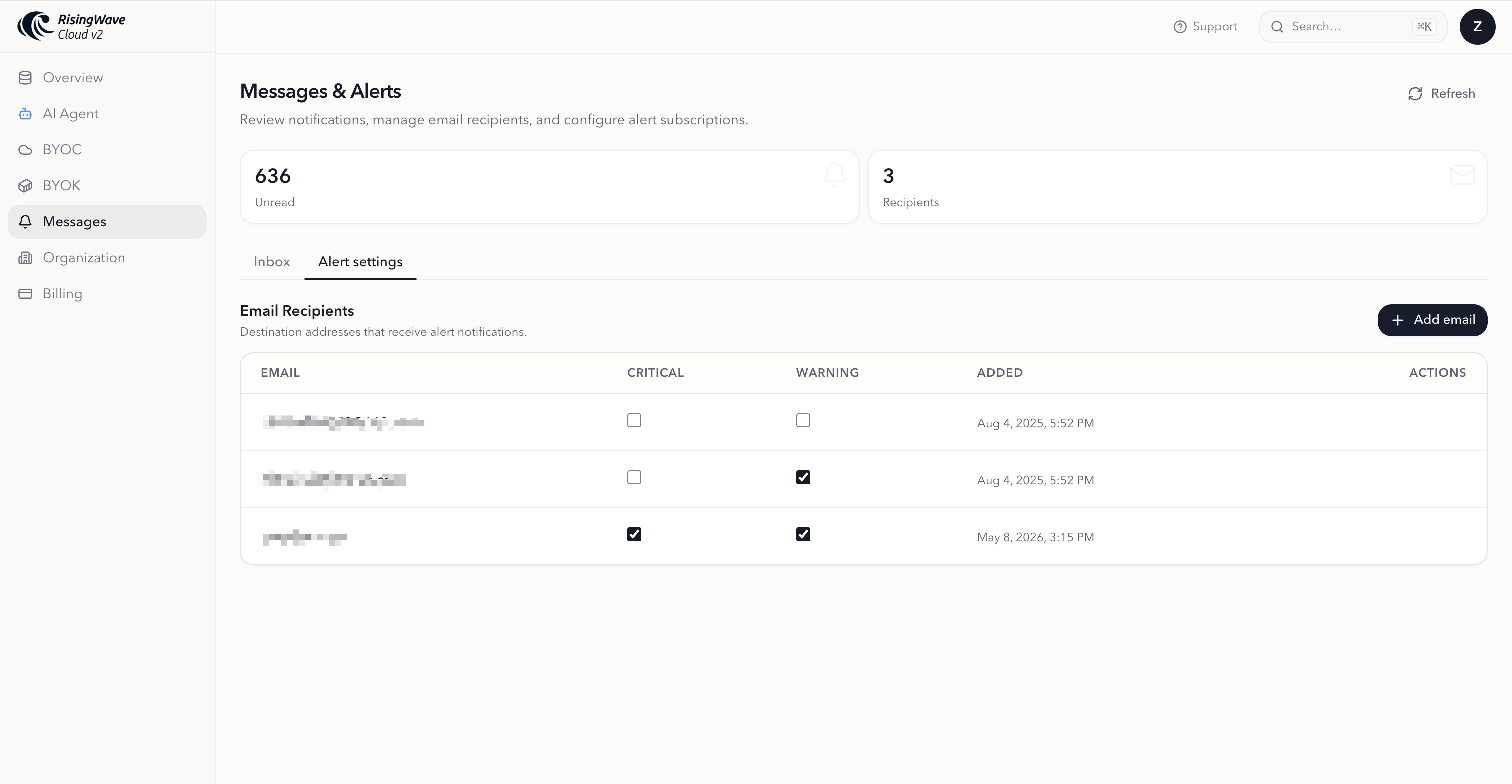
Email recipients
You can manage the list of email addresses to receive alert notifications.- Default recipient: The email address associated with your login is added as a recipient by default but can be deselected.
- Add a recipient: Click Add new email, enter the address, and confirm.
- Configure alerts: For each recipient, specify the alert severity to receive: Critical only, Warning only, or Critical and Warning.
- Test notifications: Select one or more recipients and click Test notification to verify email delivery.
- Remove a recipient: To remove a recipient, hover over their entry and click the delete icon.
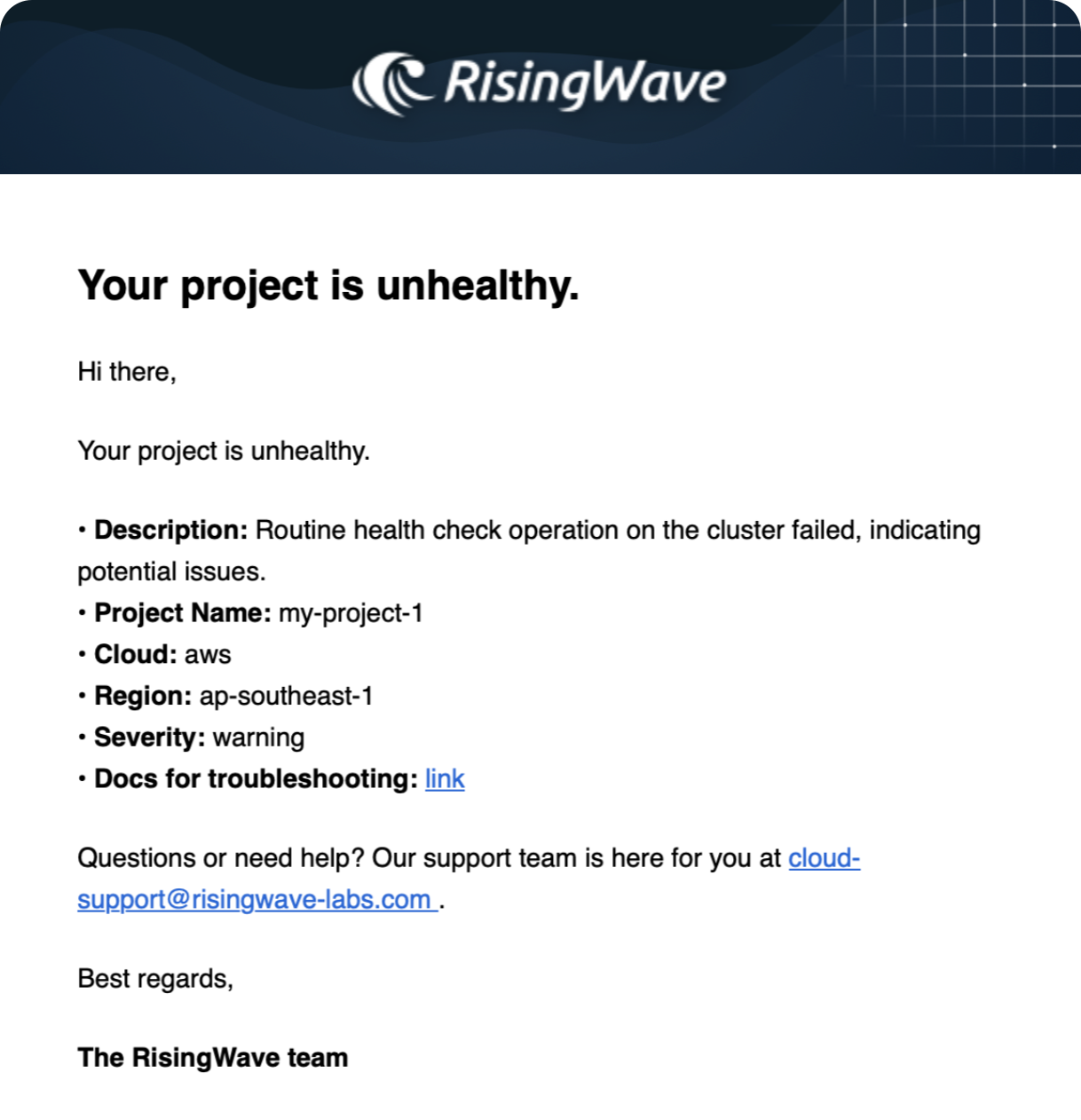
Manage alert rules
Alert rule enablement is configured separately for each cluster. Supported alert rules are enabled by default.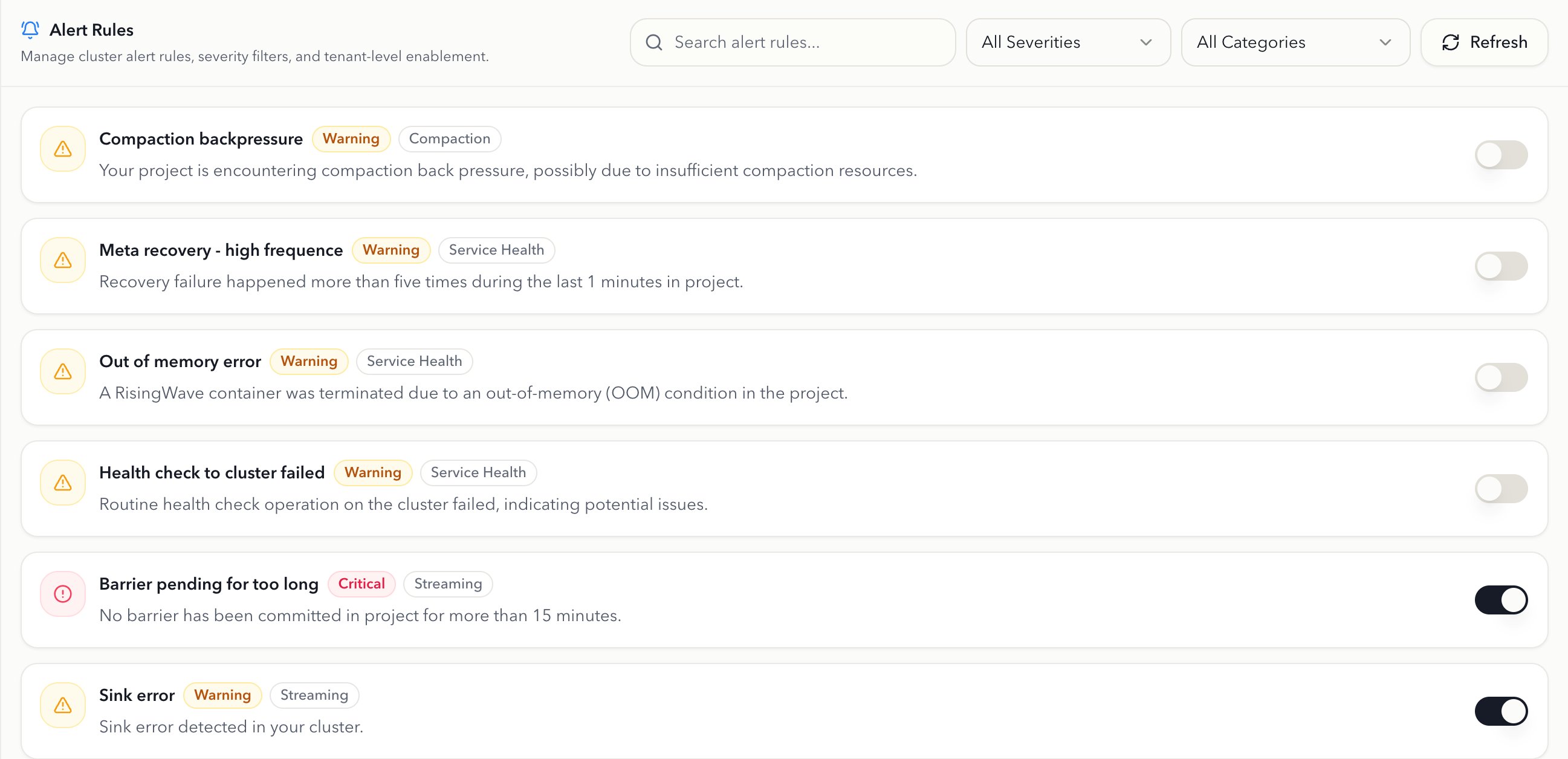
Manage alert rules for a cluster
- In the RisingWave Cloud console, open a cluster.
- In the cluster navigation, select Alert Rules.
- Optional: Search by rule name or key, or filter the list by severity and function category.
- Use the switch next to a rule to enable or disable it. RisingWave Cloud saves the change immediately.
Disabling an alert rule suppresses new RisingWave Cloud notifications and notification emails generated by that rule for the selected cluster. It does not remove existing notifications, and it does not stop the underlying cluster condition from being evaluated.
- Alert Rules controls which supported rules can generate new notifications for a cluster.
- Email recipients controls who receives email for enabled alerts.
OrganizationAdmin and ProjectAdmin roles include this access. For details, see Role-based access control.